By Andrew Compton, M.D.
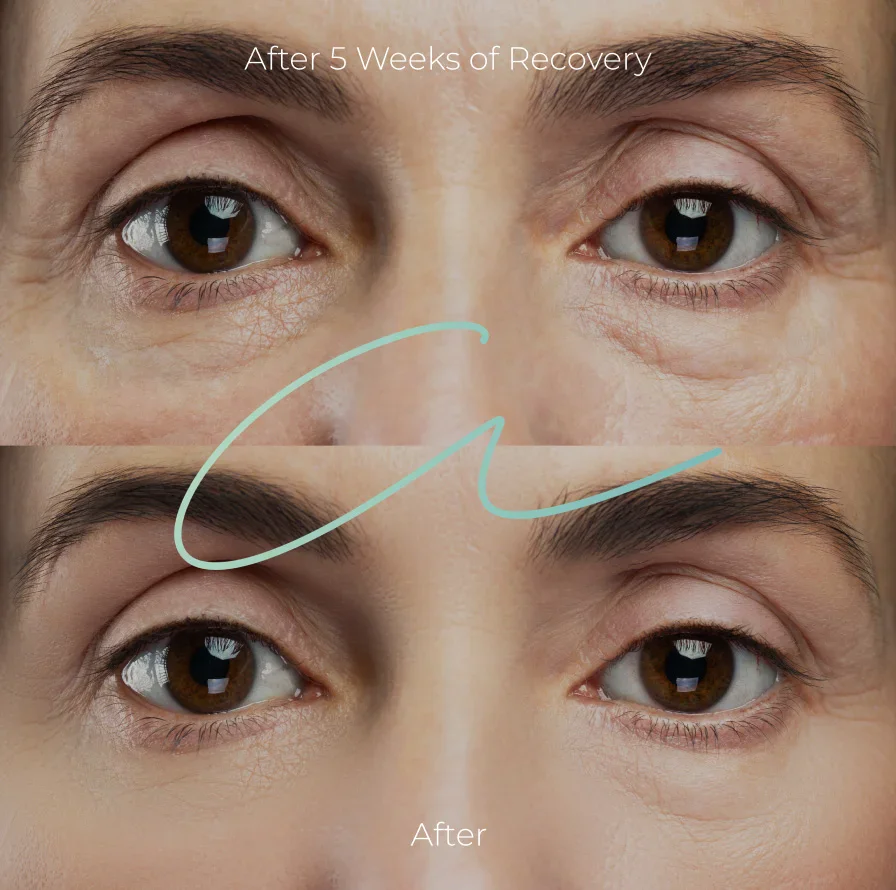
As we age, the muscles surrounding our eyelids get weaker, resulting in the accumulation of fat above and below the eyelids. Droopy eyelids with excess skin, muscle, and fat can significantly drag down a person’s appearance, making them look older. Sagging skin can also impact vision. To help our patients address these problems, Dr. Compton performs blepharoplasty.
Blepharoplasty for More Youthful-Looking Eyes
Blepharoplasty, or eyelid surgery, is performed to correct deformities and defects impacting the eyelids. Some common problems that a blepharoplasty can address are droopy upper eyelids, excess skin on the upper and lower eyelids, and ugly undereye bags.
To achieve the desired look, Dr. Compton may tighten the underlying eye muscles, get rid of extra skin, reposition excess bulging fat, and tighten the supporting structures. In many cases, blepharoplasty is performed in conjunction with a facelift or brow lift.
Preparation for Blepharoplasty
- Give Dr. Compton an overview of your medical history, and inform him about current and past conditions that may impact your candidacy, such as glaucoma, allergies, and thyroid problems.
- Stop taking herbal supplements and medications associated with increased bleeding.
- Stop smoking and drinking.
- Stock ice cubes, ice packs, clean towels, and eye drops at home.
- On the night before the procedure, avoid eating or drinking anything after midnight.
- Avoid wearing makeup on the day of surgery.
What Happens During This Procedure?
To help patients avoid discomfort, Dr. Compton uses local anesthesia with intravenous sedation or general anesthesia. Once the anesthesia takes its effect, he creates small incisions. The placement of the incisions will depend on the nature of the problem the surgery aims to address.
To correct imperfections impacting the upper eyelid, incisions are made within the natural crease of the eyelid. Through these incisions, Dr. Compton repositions fat, tightens muscles, and removes excess skin.
Lower-eyelid imperfections are addressed through incisions made at the lower lash line or on the inner part of the lower eyelid. In cases where the incision is made inside the lid, no excess skin is removed.
Once the imperfections are addressed, the incisions are closed with sutures or skin glue. A surgery performed to address both upper and lower eyelid imperfections does not usually take more than a couple of hours.
Is Blepharoplasty Right for Me?
An ideal candidate for blepharoplasty is someone who:
- Is not experiencing dry eye problems, diabetes, or thyroid eye disease
- Has realistic expectations
- Is not satisfied with the appearance of their eyelids
- Does not smoke
Though blepharoplasty is usually performed for cosmetic reasons, in some cases the procedure can help address vision obstruction caused due to sagging skin.
Recovery and Healing After Blepharoplasty
During your recovery period after blepharoplasty, use ice packs to apply gentle pressure to the operated areas. This will help the swelling diminish. To avoid discomfort, apply eye drops provided by Dr. Compton. It will also be important to clean your eyelids regularly.
Aspirin, ibuprofen, and herbal supplements can cause bleeding-related complications, so avoid these for at least a week after surgery. Do not smoke or drink for at least a month after surgery.
Avoid strenuous activities for at least a week after surgery. Wear glasses and sunglasses with tinted lenses when you are outside to ensure that your eyelids are protected. Avoid wearing contact lenses for at least a couple of weeks after the procedure, and do not rub your eyes.
Schedule Your Consultation
Facial plastic and reconstructive surgeon Dr. Andrew Compton will be happy to tell you more about blepharoplasty during a consultation at our office. Contact us today to set up your consultation.